Specimen Description
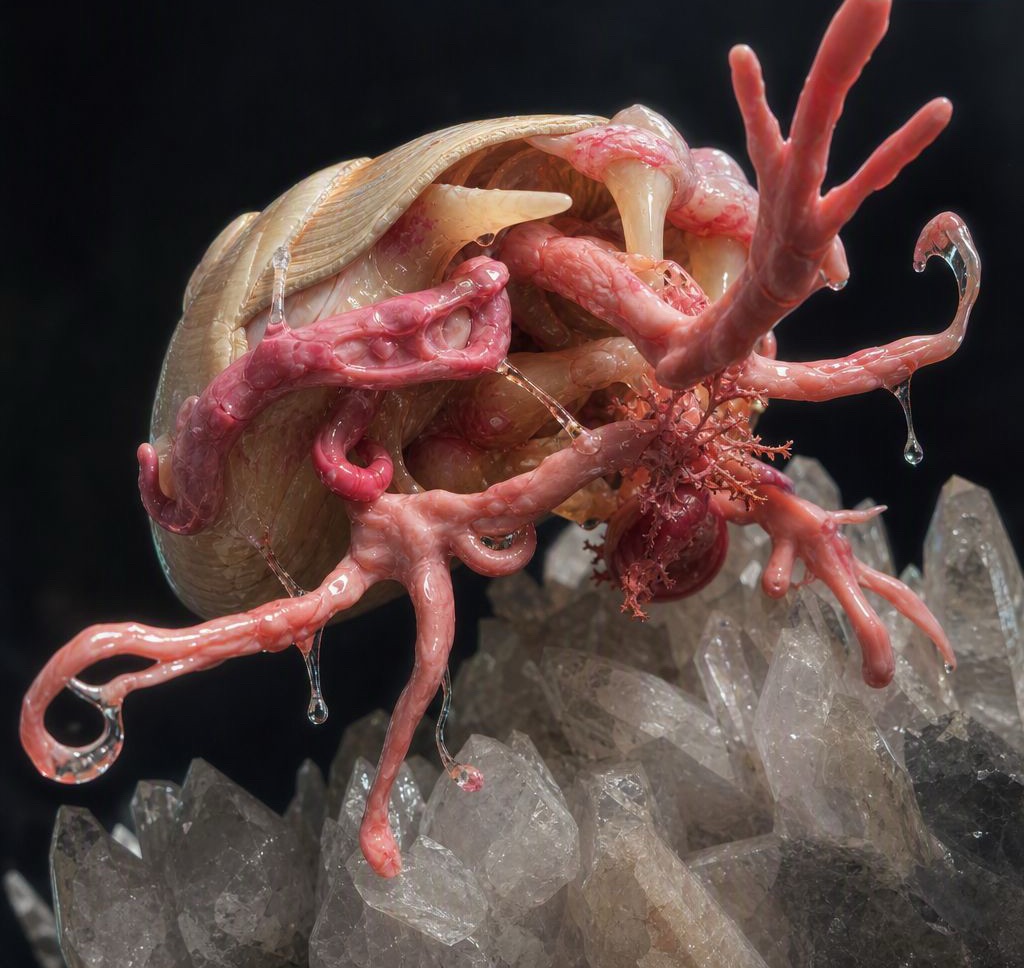
A mineral‑rich shell, often spiral or oblong, partially embedded in clay. Interior houses a fleshy organism with multiple soft tongues used for tasting, sensing, and locomotion. Maw contains a ring of pale enamel teeth, visible only when the creature fully opens to feed or defend itself. Juvenile forms remain mostly stationary; adults become mobile as tongues lengthen and stiffen.
Behavioral Notes
- Juveniles bury themselves in clay, feeding passively on minerals and detritus.
- Tongues flicker independently, mapping vibrations in the soil.
- Adults drag their shells using hardened tongue‑limbs, moving slowly but deliberately.
- Highly responsive to sound; movement increases when exposed to rhythmic tapping.
- Displays curiosity toward other specimens, especially Tooth Fairies.
Acoustic Signature: Clicking
A sharp, deliberate tapping produced from within the shell’s maw. The sound resembles enamel striking stone — rhythmic, purposeful, and often used to communicate territory or alert others to disturbances. Clicking intensifies when the creature is approached, tapped, or exposed to sudden vibrations. Explorers describe it as:
- “a pebble knocking inside a hollow tooth,”
- “a warning tapped out in bone,”
- “the Vale speaking through stone.”
Habitat
Shallow pools, clay beds, and mineral‑rich basins of Molarium Vale. Often found near Tooth Fairy feeding grounds, suggesting a shared ecological niche.
Specimen Status
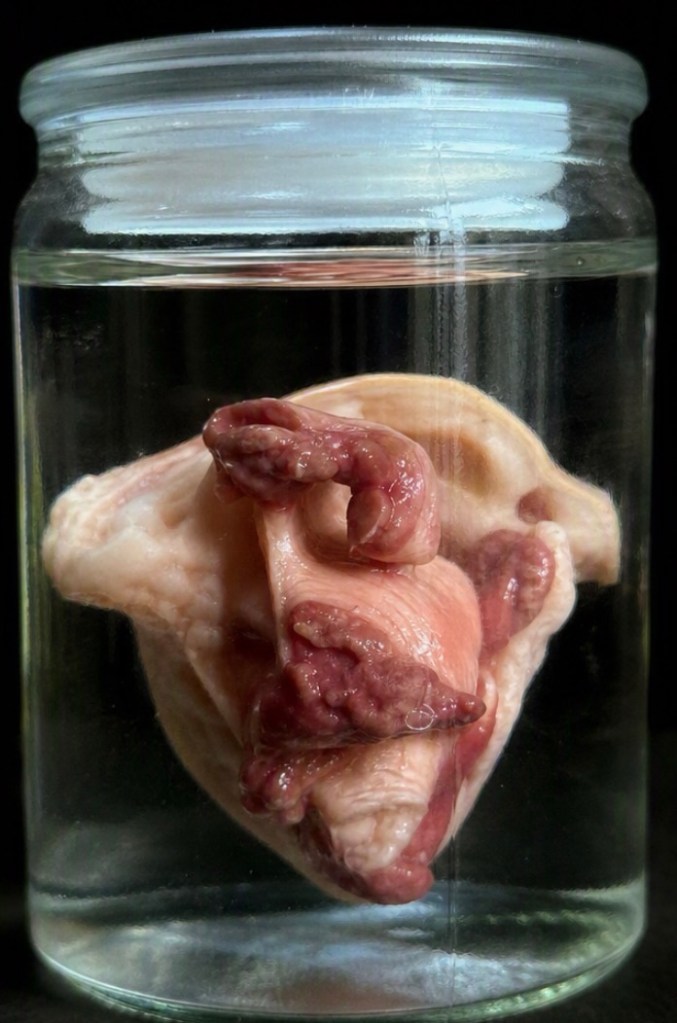
One juvenile Lingua Shell currently contained for observation. Movement minimal; clicking increases when jar is tapped. Tongues remain soft and exploratory — no hardened limbs yet.